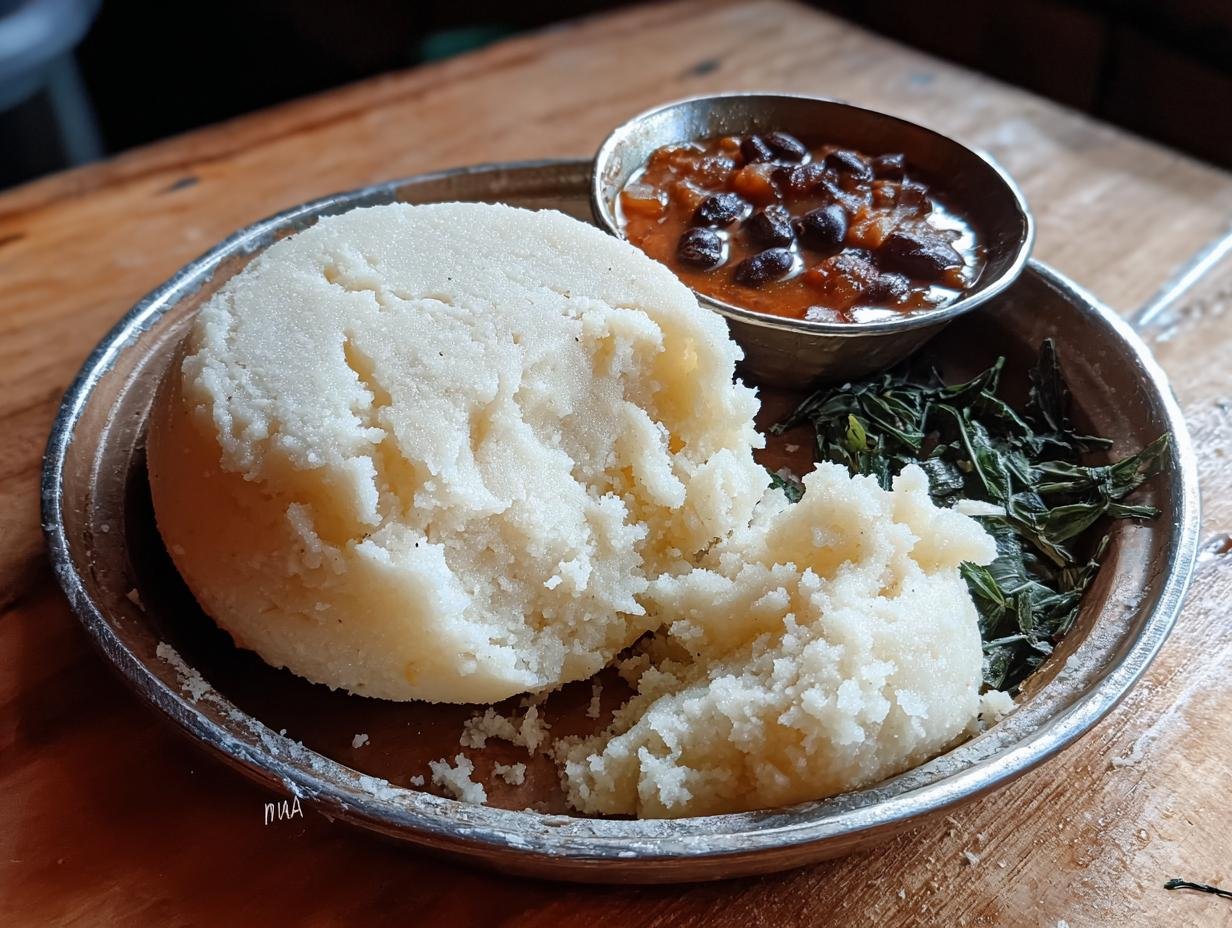
East African Ugali has been a comforting constant in my life, a dish that instantly transports me back to bustling family gatherings and the aroma of home-cooked meals. It’s more than just food; it’s a cultural cornerstone, a symbol of community and shared traditions across Kenya, Tanzania, Uganda, and beyond. This humble dish, often referred to as a simple cornmeal porridge East Africa, is surprisingly versatile and incredibly satisfying. I’ve tried many versions, but I’ve finally landed on what I believe is an authentic East African Ugali that’s both easy to make and deeply flavorful. Let’s get cooking!
What is East African Ugali?
East African Ugali is a cornerstone dish across Kenya, Tanzania, and Uganda, recognized as a fundamental staple food. Often described as a dense cornmeal porridge East Africa, it’s traditionally made by simply boiling water and gradually whisking in maize flour until it reaches a stiff, dough-like consistency. Its cultural significance is immense; it represents unity and shared meals, making it central to communal gatherings and everyday dining. The popularity of this dish stems from its versatility and affordability, serving as the perfect base for countless flavorful stews and accompaniments. This simple yet profound dish is more than just sustenance; it’s a taste of home for millions.
Why You’ll Love This East African Ugali Recipe
I know you’re going to adore this recipe. It’s simple, satisfying, and oh-so-delicious! Here’s why it’s a winner:
- Incredible Taste: It has a wonderfully mild, slightly sweet flavor that perfectly complements any main dish.
- Lightning Fast Prep: With just 5 minutes of prep, you can have this ready in no time.
- Naturally Healthy: This is a wonderfully gluten-free and vegan option, making it suitable for many diets.
- Super Budget-Friendly: Made with just a few pantry staples, it’s incredibly economical for feeding a family.
- Family Favorite: Kids and adults alike love this comforting texture and its versatility, making it a true Traditional East African Ugali.
- Effortless Execution: It’s a truly simple East African Ugali recipe that anyone can master, even on busy weeknights.
- Perfect Side Dish: It pairs beautifully with everything from hearty stews to fresh greens.
Ingredients for Traditional East African Ugali
Gathering your ingredients for this classic dish is super simple! You only need a few pantry staples to create this beloved East African staple. Here’s what you’ll need for a perfect Maize meal Ugali recipe:
- 2 cups maize flour (white cornmeal or “unga wa ugali”) – This is the star! Make sure it’s fine maize flour specifically labeled for Ugali. It gives that signature smooth, stiff texture.
- 4 cups water – The base for our Ugali. You can substitute half the water with milk for a creamier, richer texture, though water is traditional.
- Optional: pinch of salt – Just a little bit enhances the overall flavor.
- Optional: small knob of butter or oil – A tiny bit can help prevent sticking and add a subtle richness.
How to Make East African Ugali
Ready to master this staple? Making East African Ugali is surprisingly straightforward, and with these steps, you’ll achieve that perfect, lump-free consistency every time. This method is perfect for anyone asking how to cook Ugali East Africa.
- Step 1: Bring 4 cups of water to a gentle boil in a medium saucepan over medium-high heat. If you’re using them, add that pinch of salt and the small knob of butter or oil now. Let the water come to a rolling boil.
- Step 2: Once boiling, reduce the heat to low. Now, for the crucial part of this easy Ugali recipe East Africa: slowly begin to sprinkle in the maize flour, about a quarter cup at a time. Use a sturdy wooden spoon to stir and whisk vigorously as you add the flour. This constant motion is key to preventing lumps and achieving a smooth texture.
- Step 3: Continue adding the flour gradually, stirring and pressing the mixture against the sides of the pot. You’re aiming for a thick, porridge-like consistency that starts to pull away from the edges of the saucepan. This process typically takes about 5-7 minutes. Keep stirring to ensure it’s well combined and lump-free.
- Step 4: Once the Ugali has thickened to your desired consistency and is pulling away from the sides, cover the pot tightly with a lid. Let it steam on low heat for 2–3 minutes. This steaming step is essential for ensuring the maize flour cooks through completely and evenly, giving it that authentic texture.
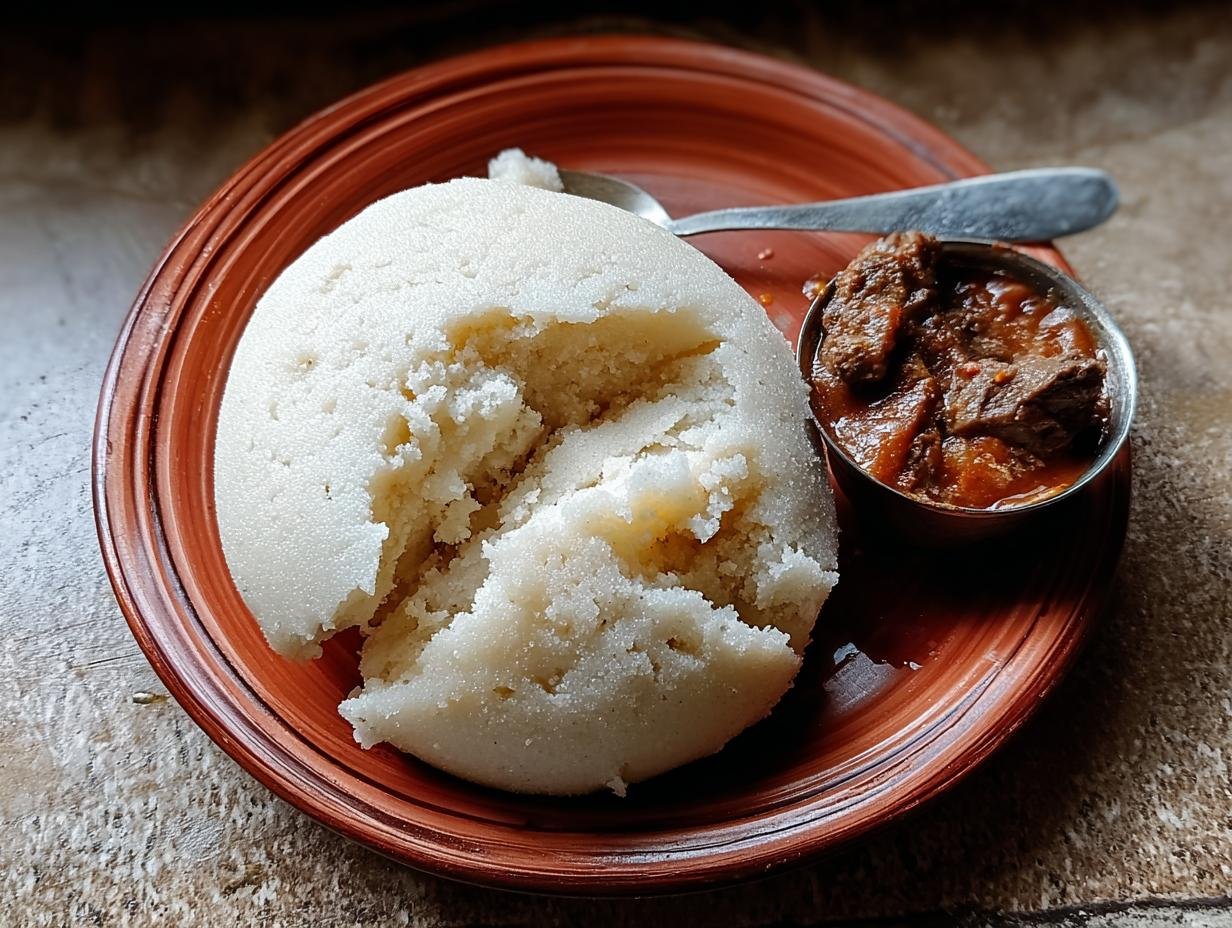
- Step 5: Remove the lid. The Ugali should now be firm and cooked through. Using your wooden spoon, or lightly wet hands (the traditional method!), scoop the Ugali onto a plate or a clean wooden board. Shape it into a rounded dome. Serve your delicious, freshly made Ugali immediately.
Pro Tips for the Best East African Ugali
Want to elevate your Ugali game? I’ve picked up a few tricks over the years that really make a difference. Follow these tips for the absolute best results!
- Always use fine maize flour specifically labeled for Ugali. Coarser cornmeal just won’t give you that signature smooth texture.
- Stirring is your best friend! Continuous, vigorous stirring with a wooden spoon is crucial, especially when adding the flour, to prevent lumps.
- Don’t be afraid to adjust the consistency. If it’s too soft, add a little more flour; if too stiff, a splash more boiling water can help.
- The steaming step is non-negotiable! It ensures the maize meal cooks through completely, giving it that perfect, tender bite.
What’s the secret to perfect East African Ugali?
The real secret lies in the technique: using the right flour and stirring constantly with a sturdy wooden spoon. This creates a smooth, lump-free, and perfectly stiff maize meal East Africa staple every time.
Can I make East African Ugali ahead of time?
While it’s best enjoyed fresh, you can prepare the Ugali a few hours in advance. Let it cool completely, cover it tightly, and store it at room temperature. Reheat gently with a little water.
How do I avoid common mistakes with East African Ugali?
The biggest pitfalls are lumps and undercooking. Ensure you’re adding flour gradually to boiling water while stirring constantly. Also, don’t skip the steaming step—it guarantees it’s cooked through.
Best Ways to Serve East African Ugali
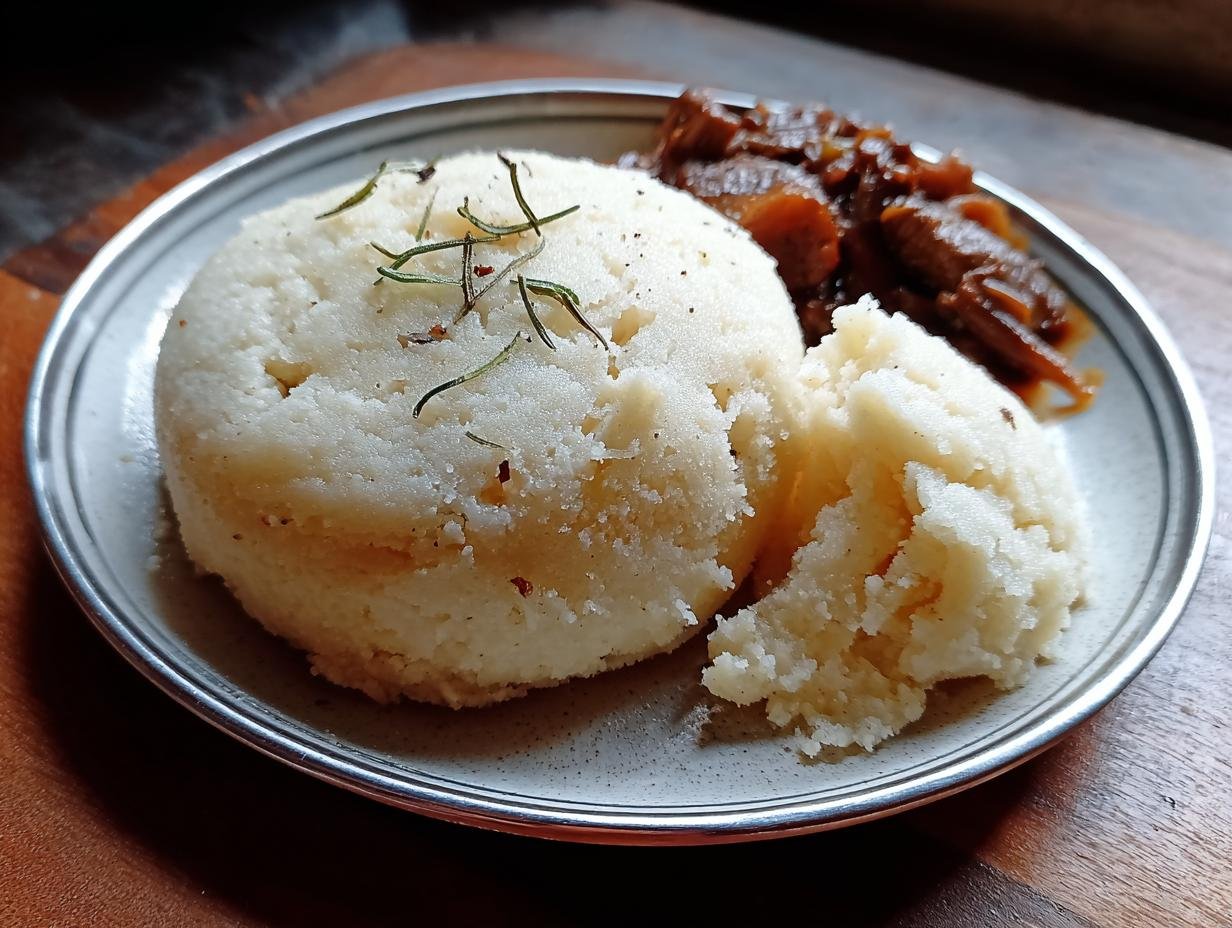
This versatile staple is meant to be paired with flavorful accompaniments, making it a complete meal. Think of it as the perfect canvas for your favorite dishes! It’s traditionally served with hearty stews, whether they’re meat-based like beef or goat stew, or vegetable-heavy like sukuma wiki (collard greens) or bean dishes. The mild flavor of the Ugali beautifully balances richer sauces and spices. It’s also wonderful with grilled meats or fish. As a classic Ugali side dish East Africa, it’s designed to be scooped up, often using your hands, to soak up delicious gravies and sauces. Don’t forget to serve it hot for the best experience!
East African Ugali Variations
While the classic maize flour version is king, I love exploring different ways to enjoy this staple. Think of these as twists on the beloved Ugali recipe East Africa has cherished for generations.
- Traditional Maize Meal: The most common and authentic version, using fine white maize flour, is the foundation for many family meals. This is what you’ll find in a classic Kenyan Ugali recipe or a typical Tanzanian Ugali recipe.
- Creamier Texture: For a slightly richer and softer Ugali, try substituting half of the water with whole milk. It adds a subtle creaminess that’s lovely with lighter stews.
- Alternative Flours (Less Traditional): While maize is traditional, some recipes might experiment with other flours like sorghum or millet, though these will significantly alter the taste and texture. For the most authentic experience, stick to maize!
- Flavor Infusions: Some families add a pinch of salt or a tiny knob of butter directly into the boiling water for added depth of flavor right from the start.
Nutrition Facts for East African Ugali
This breakdown provides a general idea of what you can expect from a typical serving of this beloved East African staple. Remember, these are estimates and can vary based on exact measurements and any optional additions you choose.
- Calories: 180
- Fat: 1g
- Saturated Fat: 0g
- Unsaturated Fat: 0.5g
- Trans Fat: 0g
- Protein: 4g
- Carbohydrates: 38g
- Fiber: 2g
- Sugar: 0g
- Sodium: 5mg
- Cholesterol: 0mg
Nutritional values are estimates and may vary based on specific ingredients used.
How to Store and Reheat East African Ugali
Proper storage is key to enjoying your delicious East African Ugali later. Once cooked, let the Ugali cool down completely at room temperature. Then, transfer it to an airtight container. Stored this way in the refrigerator, it should stay fresh for about 3 to 4 days. If you want to keep it even longer, freezing is a great option! Wrap individual portions tightly in plastic wrap, then in foil, and freeze for up to 3 months. When you’re ready to enjoy it again, you can reheat it in a few ways. To reheat, place portions in a microwave-safe dish with a tablespoon or two of water, cover, and microwave on medium power until heated through. This is a quick way to enjoy leftovers, making it easy to replicate the original deliciousness. Alternatively, you can gently steam it on the stovetop with a little water until heated through. This method helps retain its texture, making it almost as good as freshly prepared. Remember, the goal when reheating is to bring it back to a pleasant, warm consistency, almost like you’re learning how to make East African Ugali for the first time again!
Frequently Asked Questions About East African Ugali
Is Ugali gluten-free?
Yes, traditional East African Ugali is naturally gluten-free! Since it’s made purely from maize flour (cornmeal) and water, it’s a fantastic option for anyone with gluten sensitivities or celiac disease. It’s a safe and delicious way to enjoy a staple starch.
What is Ugali made of?
At its core, What is East African Ugali? It’s a simple yet satisfying dish made from just two main ingredients: maize flour (often called “unga wa ugali” or white cornmeal) and water. Some recipes include a pinch of salt or a small amount of butter or oil for added flavor and texture, but the base remains the same. This makes it incredibly accessible and budget-friendly.
How do you eat Ugali?
Eating Ugali is a tactile experience! Traditionally, you don’t use cutlery. Tear off a small piece, roll it into a ball with your fingers, and then use that ball to scoop up accompanying stews, vegetables, or meats. It’s a communal way of eating that brings people together. The consistency is firm enough to hold its shape, making it the perfect utensil for soaking up delicious sauces.
PrintAuthentic East African Ugali: Simple, Perfect
Learn how to cook perfect East African Ugali, a traditional staple made from maize flour and water. This recipe offers a step-by-step guide to creating a lump-free, comforting, and naturally gluten-free dish perfect for any meal.
- Prep Time: 5 minutes
- Cook Time: 10 minutes
- Total Time: 15 minutes
- Yield: 4 servings 1x
- Category: Side Dish
- Method: Stovetop
- Cuisine: East African
- Diet: Vegan
Ingredients
- 2 cups maize flour (white cornmeal or “unga wa ugali”)
- 4 cups water
- Optional: pinch of salt
- Optional: small knob of butter or oil
- Optional: substitute half the water with milk for a creamier texture
Instructions
- Boil the water: Bring 4 cups of water to a gentle boil in a medium saucepan. Add salt or butter if desired.
- Add flour gradually: Lower heat and slowly sprinkle maize flour, stirring constantly with a wooden spoon to prevent lumps.
- Mix and press: Continue stirring and folding the mixture until it thickens and starts to pull away from the sides of the pot.
- Steam to finish: Cover the pot and let the Ugali steam for 2–3 minutes to cook through evenly.
- Shape and serve: Scoop onto a plate or wooden board, lightly wet your hands, and form into a dome. Serve warm.
Notes
- Use fine maize flour labeled for Ugali — coarse cornmeal changes the texture.
- Stir continuously for a smooth, lump-free consistency.
- Less flour makes soft Ugali; more flour makes it firmer.
- Letting it steam ensures even cooking.
- Serve immediately for the best taste and texture.
Nutrition
- Serving Size: 1 portion
- Calories: 180
- Sugar: 0g
- Sodium: 5mg
- Fat: 1g
- Saturated Fat: 0g
- Unsaturated Fat: 0.5g
- Trans Fat: 0g
- Carbohydrates: 38g
- Fiber: 2g
- Protein: 4g
- Cholesterol: 0mg







Leave a Reply